Type “Shaklee” into Google and one of the first suggestions is a blunt question: is Shaklee legit? It is a fair thing to ask. The supplement industry is crowded with brands that lean on marketing instead of measurement, and any company that sells through independent ambassadors invites extra scrutiny. So instead of slogans, this article looks at what can actually be verified: the company’s history, its published research, its testing standards, and its guarantee. You can weigh the evidence yourself.
The short answer
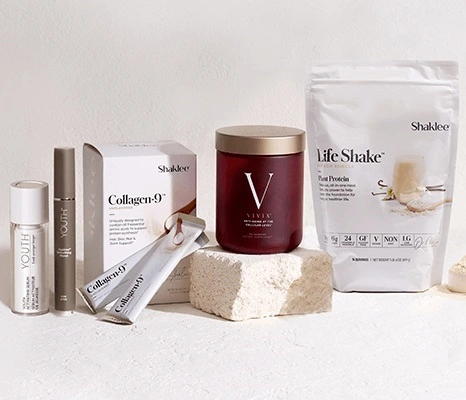
Shaklee is a real, US-based corporation founded in California in 1956, making 2026 its 70th year in continuous operation. Its founder, Dr. Forrest C. Shaklee, created one of the first multivitamins in the United States in 1915, four decades before the company itself existed. Shaklee products are sold directly through Shaklee’s official US store, manufactured to standards the company states surpass US Pharmacopeia requirements, and covered by an unconditional 100% money-back guarantee, even on an empty bottle. None of that proves any individual product will work for you, but it does separate Shaklee from fly-by-night supplement brands in ways you can independently check.
70 years is the easy part to verify
Longevity alone does not make a company trustworthy, but in the supplement world it is genuinely unusual. Most supplement brands you see advertised did not exist ten years ago; many will not exist in five. A company that has continuously manufactured and sold nutrition products in the United States since 1956, through every regulatory tightening from the 1962 Kefauver-Harris amendments, to DSHEA in 1994, to today’s current Good Manufacturing Practice (cGMP) rules, has survived decades of compliance scrutiny that newer brands have never faced.
Shaklee was also the first company in the world to be certified Climate Neutral, in 2000, and Shaklee supplements were selected for use by NASA astronauts. These are documented historical facts rather than advertising claims, and they are the kind of thing a dishonest company could not quietly invent.
The Landmark Study: the centerpiece of the evidence
The strongest single item in Shaklee’s file is the Landmark Study, published in the peer-reviewed Nutrition Journal in 2007 by a team that included Dr. Gladys Block of the University of California, Berkeley, one of the most cited nutritional epidemiologists in the world.
The study compared three groups: long-term users of multiple Shaklee supplements (averaging around 20 years of use), people who took only a single multivitamin, and people who took no supplements at all. After adjusting for age, sex, income, education, and body mass index, the long-term multiple-supplement users showed more favorable levels of several key biomarkers, including homocysteine, C-reactive protein, HDL cholesterol, and triglycerides, and a lower observed prevalence of elevated blood pressure compared with non-users.
It is important to read this honestly. The Landmark Study was cross-sectional, meaning it photographed people’s health at a single point in time rather than following them forward, so it shows association, not proof of cause and effect. People who take supplements faithfully for two decades may also exercise more or eat better. The researchers adjusted for the obvious confounders, but no observational study can adjust for all of them. What makes it notable is not that it is the final word, it is that it exists at all. Very few supplement companies have funded independent, peer-reviewed research of this scale on their actual long-term customers.
What “surpasses US Pharmacopeia” actually means
Shaklee states that it runs more than 350 quality tests on a new ingredient before it is accepted into a product, screening for contaminants such as heavy metals, pesticides, and microbial impurities. The phrase to understand here is US Pharmacopeia (USP), a nonprofit that sets quality and purity standards for medicines and supplements in the United States. Dietary supplements are not required by law to meet USP standards, so a company voluntarily testing to or beyond that bar is choosing a stricter standard than regulation demands. That is verifiable in principle: USP-level testing produces certificates of analysis, and reputable manufacturers will discuss their testing program openly.
The guarantee is where talk gets expensive
Marketing is cheap; refunds are not. Shaklee backs its products with a 100% money-back guarantee that applies even if the bottle is completely empty. A company willing to refund used product is making a costly bet that most customers will be satisfied enough not to ask. It is not a scientific endpoint, but it is a meaningful signal of how much confidence a company has in its own formulas, and a practical protection for you as a buyer.
So is the ambassador model a red flag?
This is usually the real question behind “is Shaklee legit.” Shaklee sells through independent ambassadors rather than retail shelves, which is a direct-sales model. The honest answer is that the sales model and the product quality are two separate questions. A direct-sales structure does not make the underlying products fake or unsafe, the Landmark Study, the testing program, and the 70-year manufacturing record stand regardless of how the products reach you. What matters for you as a buyer is buying from someone transparent, ordering through the official Shaklee store so you get authentic product and the real guarantee, and judging the products on their own evidence. Income from the ambassador opportunity itself is a different matter and is never guaranteed.†
The bottom line
Is Shaklee legit? On the things that can be checked, corporate history, peer-reviewed research, voluntary testing standards, and a real money-back guarantee, Shaklee holds up far better than the typical supplement brand. The Landmark Study is an association rather than ironclad proof, and no supplement is a substitute for a good diet, sleep, and exercise. But “legit” in the sense most people mean it, a real company, with real research, that stands behind its products, is a reasonable conclusion from the evidence.
If you want to explore the actual range, you can shop Shaklee USA products through the official store here, or read more about the Landmark Study and Shaklee’s testing standards on our homepage.
Sources Cited:
1. Block G, Jensen CD, Norkus EP, et al. Usage patterns, health, and nutritional status of long-term multiple dietary supplement users: a cross-sectional study. Nutrition Journal. 2007;6:30. doi:10.1186/1475-2891-6-30.
2. United States Pharmacopeia (USP). Dietary Supplements Standards. usp.org.
3. Shaklee Corporation. Science & the Landmark Study. https://us.shaklee.com/en_US/new/proof-supplements-work.
4. Shaklee Corporation. Highest Quality Commitment. https://us.shaklee.com/en_US/new/highest-quality-commitment.
5. U.S. Food & Drug Administration. Dietary Supplements & current Good Manufacturing Practices (cGMPs). fda.gov.